For Students
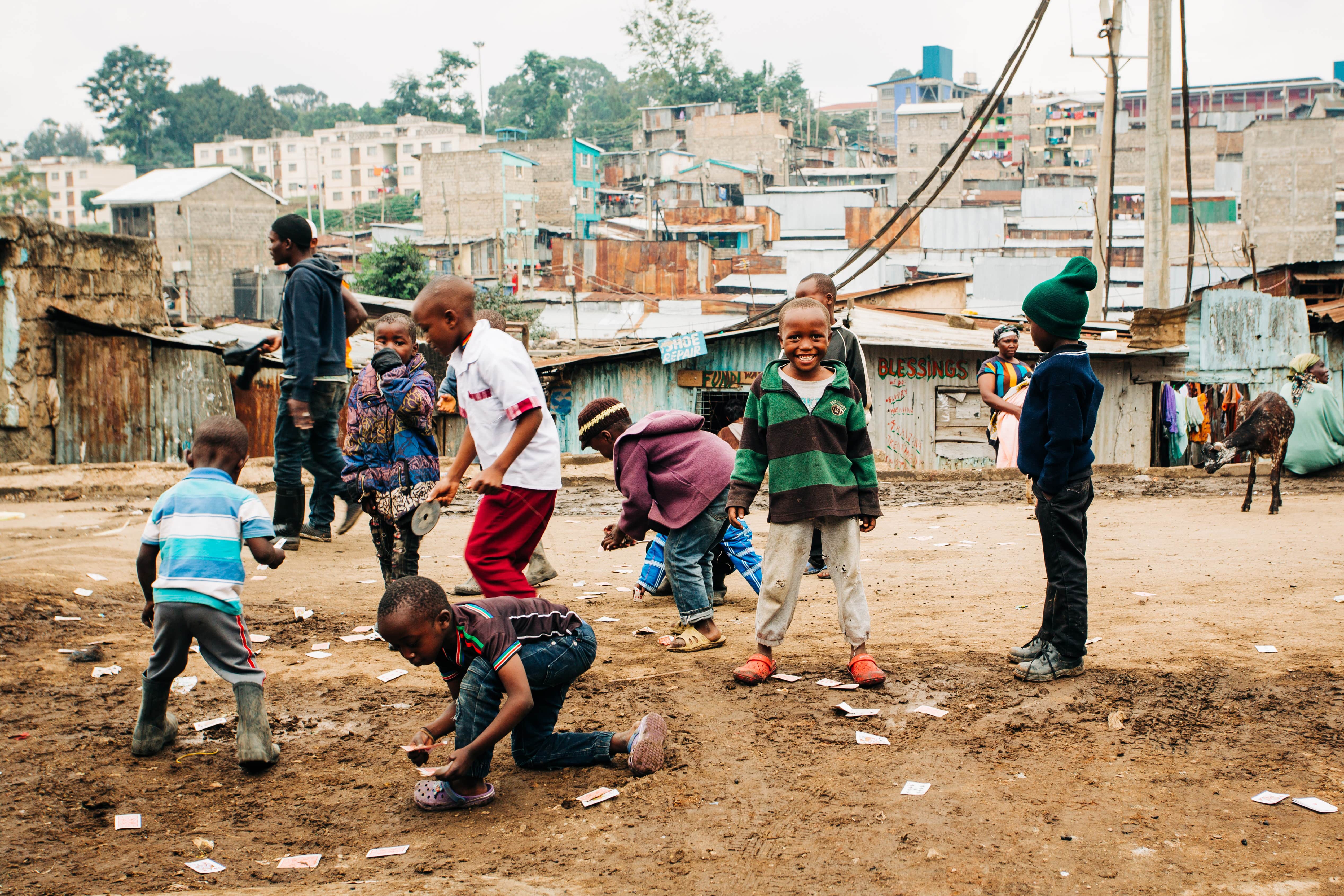
Welcome to Slum Health Lab
This section was created to inspire and support students who are curious about the world’s fastest-growing urban environments: slums. These informal settlements are home to more than a billion people and sit at the intersection of some of the most urgent challenges of our time - urban planning, global health, poverty, and climate resilience. Yet slums remain under-researched and underrepresented in mainstream education. You have the power to change that.
At Power of Love, we’ve had the privilege of living, working, and learning in some of the world’s most underserved urban communities. Slums are often invisible in global conversations - yet they are vibrant, complex, and full of potential. At the Power of Love Foundation, our work has focused on healthcare delivery, economic resilience, and community-driven solutions in these neighborhoods. This section is an extension of that commitment. We believe that young people - future researchers, planners, and public health leaders - deserve access to tools, stories, and knowledge that can help them engage deeply and meaningfully with this issue. This space is designed as your launchpad. Dive in.
We hope this site becomes not just a source of information, but a shared space - where you can explore, ask questions, reflect, and contribute. Whether you’re researching for a paper, a project, an internship or imagining your future career, you are welcome here.
1. What Are Slums?
Slums-also called informal settlements-are dense urban neighborhoods where residents often lack secure housing, clean water, electricity, sanitation, and formal recognition by city authorities. Homes may be built with improvised materials on land that isn’t officially zoned for residential use. Slums exist in almost every country on earth, from the edges of megacities to tucked-away corners of expanding towns.
But slums are more than statistics or headlines. They are lived-in spaces full of work, family, culture, resilience, and hope. They form because cities grow faster than governments can plan, and because people migrate in search of work, safety, or stability-but find affordable housing out of reach.
2. Why Are Slums Important?
Slums are where urbanization, inequality, and human potential converge. More than 1 billion people - 1 in 8 globally - live in informal settlements. By 2030, that number is forecasted to double to a quarter of the world’s population.
Understanding slums is essential for:
Urban planning: You can’t plan inclusive cities without acknowledging their fastest-growing areas.
Climate resilience: Slums often lie in flood-prone zones and are highly vulnerable to climate disasters.
Social justice: Residents are frequently excluded from services, rights, and protections.
Global health: You cannot reach global health goals while overlooking the people most likely to fall through the cracks.
Slums are not “temporary problems.” They are permanent parts of the urban landscape. And they hold the key to building more just, sustainable cities.
3. The Healthcare of People Living in Slums
Slum residents face some of the harshest health conditions in the world. Overcrowded living, unsafe water, poor sanitation, and lack of formal health access create a “perfect storm” for disease-and a constant risk to life.
Common health challenges include:
Waterborne illnesses like cholera, typhoid, and dysentery
Respiratory issues from air pollution and indoor smoke
Maternal and child mortality, often due to lack of prenatal care
Mental health conditions, including depression and trauma, made worse by stigma and isolation
Infectious diseases such as HIV/AIDS and tuberculosis, worsened by poor treatment adherence and social exclusion
But slum health is also a story of innovation. From community health workers to task-shifting models and mobile clinics, many of the most effective healthcare strategies emerge from necessity and creativity within these communities.
How This Space Is Structured - And How to Use It
This learning space is built to help you explore, reflect, and act at your own pace. Whether you're just curious about urban inequality or diving deep into a school project, you’ll find tools, stories, and questions that make slum health real and relatable.
This Space Has Four Main Sections:
Start Here
Foundational ideas and resources - what slums are, why they matter, and how health systems work (or don’t work) in informal communities. Think of this as your jumping - off point.What’s New?
A regularly updated feed of articles, student essays, news highlights, and recent research from around the world. This is where you’ll find ongoing discoveries and voices from the field.Deep Dive Resources
A growing library of glossaries, downloadable explainers, maps, data visualizations, and curated reading lists. These are great for research projects, presentations, or independent learning.Student Voices & Community
A space to contribute your reflections, questions, essays, or even a short video. You can also ask our team questions, propose topics, or connect with others who care about slum health.
Tips for Using This Space
Browse freely or focus in: Explore what interests you-there’s no “right” order.
Use it for school projects: Many of these materials are designed to support assignments or presentations.
Ask questions: If something confuses you or sparks a question, submit it-we may feature it in our Q&A.
Share your ideas: We want to hear from you. Whether it’s a comment, a drawing, a poem, or a question-your voice matters.
Come back often: This page will keep growing. Check back for new stories, research, and opportunities.
What Are Slums?
Definition
Slums-also called informal settlements or urban informal housing-are densely populated neighborhoods characterized by insecure land tenure, poor infrastructure, overcrowding, and lack of access to basic services such as clean water, sanitation, electricity, and healthcare.
The United Nations defines a slum household as one that lacks at least one of the following:
Durable housing
Sufficient living space
Access to clean water
Access to sanitation
Secure tenure
These neighborhoods often emerge outside formal urban planning processes - built by necessity, not design-and are home to more than 1 billion people today.
A Brief History of Slums
Slums are not new. They have existed for centuries - closely tied to industrialization, colonization, and global migration.
19th century Europe: Cities like London and Paris saw the rise of inner-city tenements with poor sanitation during the Industrial Revolution.
Post-colonial cities: In Asia, Africa, and Latin America, rapid urbanization outpaced infrastructure development, leading to informal housing on city peripheries.
Global neoliberalism (1980s–present): Economic policies that reduced public investment in housing and services worsened urban inequality and fueled the growth of informal settlements.
Slums are a product of exclusion-from land, services, economic opportunity, and voice in planning decisions. Yet they are also spaces of innovation, resilience, and community building.
Why Naming Matters
The term slum is controversial. Some consider it stigmatizing, preferring terms like informal settlement, shanty town, jhuggi jhompri colony, compound, urban poor neighborhoods, or self-built communities. Language shapes perception - and we use these terms not to label people, but to help understand complex urban realities and advocate for change.
The Growth of Slums
A Rising Urban Reality
Slums are the fastest-growing form of urban housing in the world. Today, over 1 billion people-about 1 in 8 globally-live in informal settlements. By 2030, that number could reach 2 billion. Most of this growth is happening in the Global South: in cities like Lagos, Mumbai, Nairobi, Dhaka, and Rio de Janeiro.
This isn’t just a housing issue. It’s a health, human rights, and urban planning issue. To understand the future of cities - and of public health - we must understand why slums grow.
What Drives the Growth of Slums?
1. Rapid Urbanization
People are moving to cities in huge numbers - faster than governments can build housing or infrastructure. In many cases, people settle wherever they can, often in unplanned, informal areas.
Over 70 million people move to cities every year
In sub-Saharan Africa, more than 50% of urban residents live in slums
2. Climate Change
Climate-related disasters (floods, droughts, cyclones) are displacing rural populations. People fleeing climate shocks often land in urban slums. Ironically, these settlements are themselves highly vulnerable to climate risks-like flooding, heat waves, and landslides.
3. Globalization and Poverty
Global trade and economic reforms have pushed some communities into deeper poverty, often eliminating rural livelihoods. In search of work, people migrate to cities - but find few affordable options once there.
Informal economies flourish in slums, but wages are often unstable and exploitative
Housing markets do not cater to low-income urban dwellers
4. Conflict and Violence
Urban slums often absorb people displaced by war, ethnic violence, or political instability. These settlements offer anonymity, access to basic services, and a degree of protection - but also carry risks of overcrowding, insecurity, and tension.
5. Policy Failures
In many places, urban policy either ignores slum dwellers or treats them as illegal. This leads to evictions, lack of investment, and a cycle of invisibility. The absence of affordable housing, inclusive land laws, and participatory planning feeds slum growth.
Why It Matters
The expansion of slums is not just a housing issue. It impacts:
Public health: Slum residents face higher rates of disease, malnutrition, and mental illness
Education: Many children in slums attend overcrowded or underfunded schools-or none at all
Economic resilience: Slum economies are vibrant but often excluded from formal systems
Urban planning: Cities cannot be inclusive or sustainable without addressing informal settlements
Where Is Slum Growth Happening?
Slums are a global phenomenon, but their growth is concentrated in rapidly urbanizing regions of the Global South. The most significant expansion is occurring in:
🌍 Sub-Saharan Africa
The fastest rate of slum growth globally
Cities like Lagos (Nigeria), Kinshasa (DRC), Nairobi (Kenya), and Lusaka (Zambia) are expanding rapidly without formal infrastructure
Over 60% of urban residents in the region live in informal settlements
🌏 South and Southeast Asia
Home to some of the largest slums in the world, including Dharavi (Mumbai, India) and Orangi Town (Karachi, Pakistan)
Countries like Bangladesh, the Philippines, and Indonesia are also seeing slum expansion due to coastal climate threats and rural-to-urban migration
🌎 Latin America and the Caribbean
While some countries (like Brazil and Colombia) have invested in slum upgrading, large favelas and barriadas still dominate the urban landscape
In some cities, up to one-third of residents live in informal settlements
🏙️ Middle East and North Africa
Conflict-driven displacement (e.g., Syria, Yemen, Sudan) has contributed to informal urban growth
Some cities have longstanding informal areas that are now urbanized but still lack services
❗Even in Wealthy Countries
Though less visible, informal or precarious housing exists in cities like Los Angeles, Paris, and Tokyo, often in the form of tent cities, squatter settlements, or underregulated migrant labor housing
Help us continue our work. Consider a gift to POL.
Block error: "Array to string conversion" in block type: "button"